
Views: 0 Author: Site Editor Publish Time: 2026-10-26 Origin: Site


Picture this. A bustling Saturday afternoon. Shopping carts are piled high. However, a checkout line snakes all the way down the main aisle. Frustrated customers constantly glance at their watches. Eventually, a few abandon their carefully selected items altogether, walking out the door empty-handed. In modern retail operations, time is the ultimate currency. Traditional cashier-led checkouts frequently create severe bottlenecks during peak hours. This directly leads to lost revenue and damaged brand loyalty.
The ultimate bottleneck-breaker is giving consumers direct control over their transaction process. This shift drastically reduces wait times and fundamentally transforms the retail experience. Below, we explore the mechanics, hardware specifications, and undeniable field data behind how these automated systems eliminate queues.
Key Takeaways:
Drastic Wait Time Reduction: A well-implemented automated system can cut transaction times by up to 40 percent, keeping store traffic flowing seamlessly.
Psychological Comfort: Interactive screens reduce perceived wait times by keeping customers actively engaged in the checkout process rather than passively standing in line.
Labor Optimization: These systems allow management to reallocate staff to customer service and floor assistance, improving overall store efficiency.
Revenue Boosting: Beyond cutting queues, automated checkouts consistently increase Average Order Value through low-pressure, programmed upselling.
Understanding the difference between actual and perceived wait times is crucial for optimizing the customer journey. Behavioral studies reveal that an unoccupied wait feels significantly longer than an occupied one. When a shopper steps up to a touch terminal, they are immediately engaged in the task at hand. This active, physical participation eliminates the anxiety and sheer boredom of standing idly in a slow-moving line.
Modern consumers crave autonomy. They want to dictate the pace of their shopping trip from start to finish. An automated checkout station gives them exactly that control. They gain privacy for sensitive purchases and the instant gratification of completing the process on their own terms without forced social interaction.
Beyond psychology, the sheer mechanical efficiency of these systems easily outpaces traditional methods. Intuitive interface design allows customers to scan barcodes, weigh produce, and modify quantities rapidly. The visual layout guides the user logically from one step to the next without hesitation, creating a frictionless flow.
Specifically, the integration of tap-to-pay technology and digital wallets makes a self checkout kiosk incredibly fast. Removing cash handling, dispensing change, and manual receipt printing shaves crucial seconds off every single transaction. Over the course of a day, these saved seconds compound. This dramatically increases the throughput of the entire store.
Looking at recent market movements across the global retail sector, a massive structural shift is underway. Current industry analyses indicate that the push toward automation is accelerating rapidly. Over 75 percent of fast-casual and retail businesses are prioritizing automated deployments by the end of 2025. This evolution is primarily driven by changing consumer expectations for speed and ongoing labor market shortages. Industry experts note that businesses leveraging these automated solutions see unprecedented operational resilience. They adapt to fluctuating consumer volumes with ease. Retailers are moving away from entirely cashier-dependent models toward hybrid zones, balancing automated lanes with limited full-service counters to maximize floor efficiency.
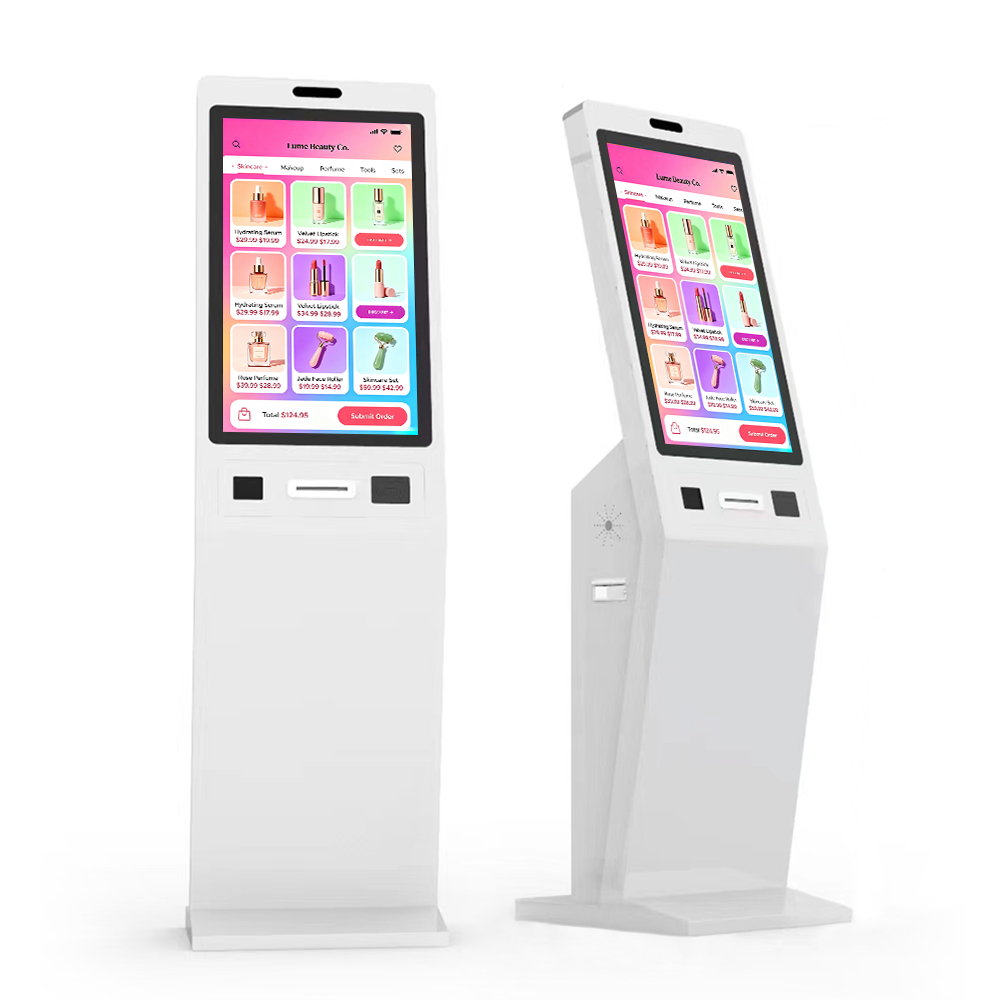
From a hardware engineering perspective, a machine is only as good as its uptime. Industrial-grade hardware is an absolute necessity to ensure the system does not freeze or crash during peak hours. High processing power guarantees that barcode scans register instantly. Payment gateways must communicate without lag to prevent user frustration that could otherwise lead to abandoned carts.
When deploying a self-service kiosk, consumer-grade tablets simply will not survive the harsh retail environment. Professional setups utilize 21.5-inch to 32-inch commercial displays with 10-point capacitive touch technology. This ensures ultra-responsive interactions even with varying finger pressures or moisture. Internally, robust motherboards featuring Rockchip RK3288 or RK3399 for Android environments, or Intel Core i3 and i5 processors for Windows environments, provide the necessary computing muscle. Built-in 58mm or 80mm thermal printers and omnidirectional 2D barcode scanners complete the ecosystem. These specifications ensure seamless traffic flow from the aisle to the exit.
To truly understand the operational impact, we must look at the direct contrast between legacy systems and modern deployment. The data below highlights why engineering a better checkout flow yields immediate dividends.
| Operational Metric | Traditional Cashier Register | Automated Terminal |
|---|---|---|
| Physical Footprint | Requires large, bulky counters. | Compact. Fits 3 units in the space of 1 legacy register. |
| Processing Speed | Slower. Relies on manual scanning and cash handling. | Up to 40 percent faster with tap-to-pay and fast UI. |
| Upsell Consistency | Inconsistent. Depends on staff training and mood. | 100 percent consistent via programmed on-screen prompts. |
| Labor Allocation | Tethers one employee to one single checkout lane. | One employee can monitor 4 to 6 automated lanes simultaneously. |
Interestingly, the value of automation extends far beyond just saving time. An automated system never forgets to upsell. Strategically timed prompts result in consistently higher sales. It removes the social friction of a cashier awkwardly asking for an upsell. The customer can comfortably tap the screen to add matching accessories, extra batteries, or extended warranties on their own accord.
In addition, when customers input their own data, transaction errors plummet. More importantly, the staff members previously tethered to a cash register are now free to roam. Management can reallocate these human resources to restock shelves, assist shoppers on the floor, and elevate the overall in-store experience. This perfectly blends technological efficiency with high-touch hospitality.
Strategic placement dictates success. Position your automated lanes near the exit. Ensure they are highly visible from the main aisles. Floor-standing units work best for large grocery setups, while compact wall-mounted or desktop models suit convenience stores. Leave ample space for carts and baskets to prevent physical traffic jams.
Do not buy blind. Match the hardware to your daily transaction volume. If you run a high-volume supermarket, mandate an 80mm auto-cut thermal printer and a heavy-duty barcode scanner. For boutique retail, a sleek 21.5-inch retail kiosk with a built-in POS bracket might suffice. Opt for modular designs that allow for quick component swaps if a breakdown occurs. This minimizes costly downtime during your most critical trading hours.
Long queues are no longer an inevitable part of shopping. They are a highly solvable engineering problem. By addressing the root causes of checkout friction through speed, psychological engagement, and robust hardware, automated lanes redefine the end of the shopping journey. Adopting this technology has shifted from being a luxury reserved for big-box giants to an absolute necessity for any business determined to stay competitive. If your store suffers from peak-hour bottlenecks, it is time to upgrade your hardware infrastructure. Explore the professional-grade commercial displays and automated solutions at Aiyos to find the exact hardware parameters that fit your retail environment, and transform your store efficiency today.
Modern units are designed with highly intuitive, smartphone-like interfaces. With clear visual cues, large fonts, and the option for a staff member to assist nearby, adoption rates remain exceptionally high across all demographics, including older generations.
They are incredibly space-efficient. You can typically fit two to three slim automated units in the exact same footprint required for one traditional cashier wrap. This instantly maximizes your valuable retail floor space.
Yes. Most modern commercial units are hardware-agnostic or offer flexible APIs. This allows them to seamlessly sync with your current inventory management and point-of-sale software without requiring a complete and costly system overhaul.
No. Rather than replacing staff, these systems allow businesses to reallocate human workers to much more valuable tasks. Employees can focus on personalized customer service, complex problem-solving, and store maintenance, ultimately enhancing the overall shopping experience.
The investment varies based on hardware specifications like screen size, processor type, and integrated peripherals. While initial costs range from a few hundred to over a thousand dollars per unit, the measurable return on investment through labor optimization and increased sales volume typically offsets the expense within the first few quarters.
While shrinkage is a common concern, modern hardware mitigates this risk effectively. Integrated security scales, computer vision cameras, and AI-driven behavior analysis work together to detect unscanned items immediately. Furthermore, assigning a single staff member to oversee the automated zone drastically reduces opportunistic theft.


