
Views: 0 Author: Site Editor Publish Time: 2026-10-07 Origin: Site


You install a brand-new display outside. The afternoon sun hits it. Suddenly, your expensive investment turns into a dark, unreadable mirror. Sound familiar? Fighting the sun requires more than just standard commercial hardware. It demands specialized engineering. Brightness remains the absolute most critical factor in ensuring your exterior terminal delivers a crisp, vibrant message to your audience. This guide breaks down exact luminance requirements, compares display technologies, and provides a practical engineering checklist for securing the perfect high-brightness setup.
Nits Dictate Visibility: Standard indoor screens output roughly 300 to 500 nits. In contrast, an exterior setup demands at least 2,500 nits to combat direct sunlight.
Environment Drives Specifications: Shaded transit shelters might survive on 1,500 nits. Completely exposed, south-facing locations demand maximum raw luminance.
Optical Clarity Matters: Implementing a full lamination panel significantly reduces internal reflections. This enhances readability without relying exclusively on raw power.
Thermal Management is Vital: Intense luminance generates substantial heat. Pairing the screen with a ruggedized enclosure featuring active cooling ensures long-term survival.
To navigate the world of commercial hardware, you first need to understand the nit. In technical terms, a nit equals one candela per square meter. In practical engineering terms, it is the standard unit of measurement for light emitted toward the viewer.
There is a massive chasm between indoor and outdoor requirements. A standard indoor digital signage monitor looks incredibly bright under fluorescent office lights. However, place that exact same monitor outside on a sidewalk. The sun completely washes out the image, leaving a dark, highly reflective surface.
Consequently, the industry relies on high-brightness panels to combat this phenomenon. Engineers generally define this as anything exceeding 1,500 nits. This elevated luminance acts as the foundational baseline for any successful exterior installation.
The exact luminance required depends entirely on the physical environment. For south-facing or completely uncovered installations, the display must aggressively cut through intense midday sun. In these direct sunlight environments, you need a panel pushing 2,500 to 3,000 nits. Anything less will look faded during peak daylight hours.
Furthermore, shaded or covered outdoor areas offer a slight reprieve. If your screen sits under a deep architectural awning or beneath heavy tree canopies, 1,000 to 1,500 nits is often sufficient. This reduction lowers the initial purchase price and reduces ongoing operational electricity costs.
Specifically, blasting maximum brightness at midnight is a massive waste of electricity. It can also blind passing drivers. Integrating auto-dimming technology via ambient light sensors is mandatory. These sensors continuously read the surrounding environment. They instantly dial back the screen output as the sun sets to maintain optimal viewing comfort.
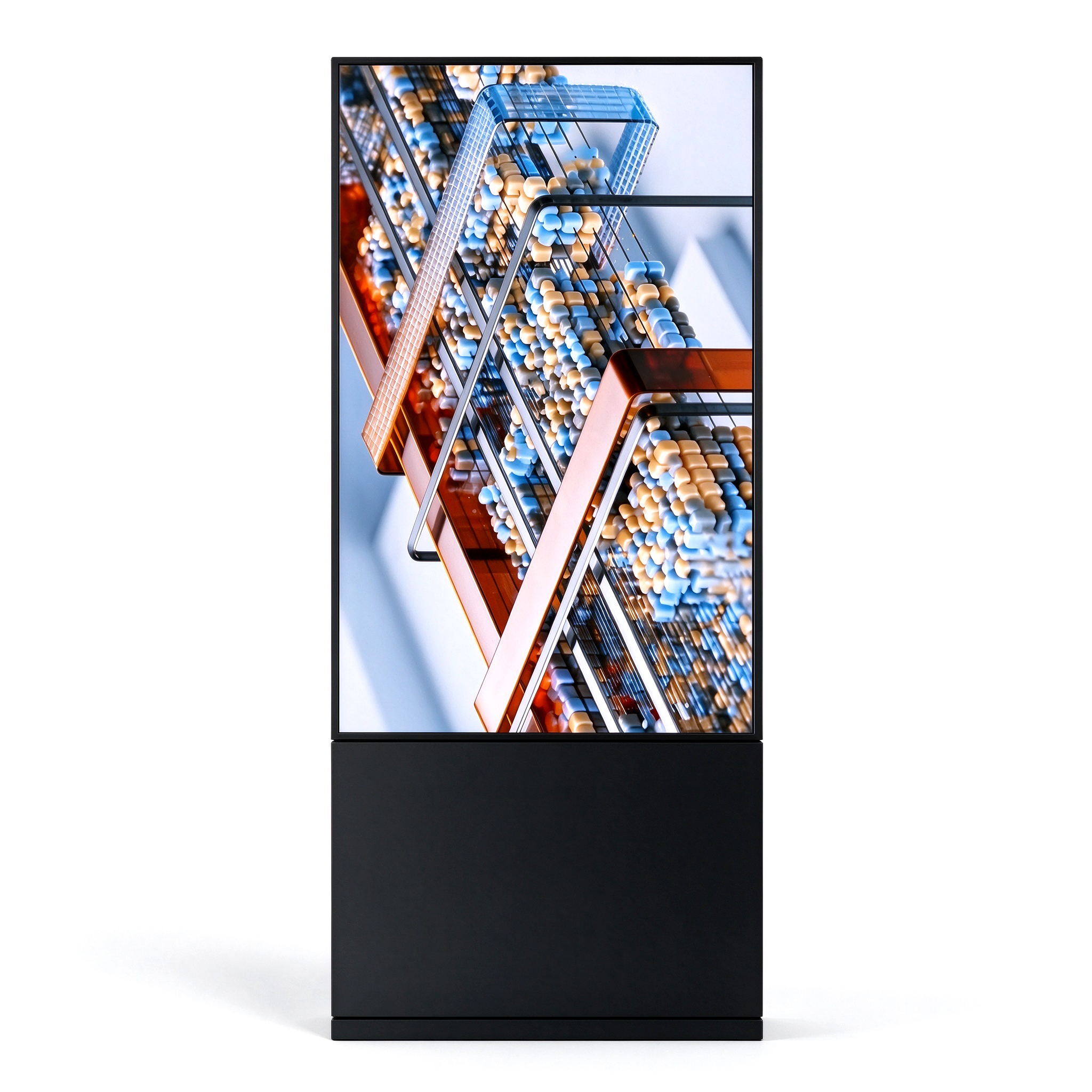
Raw power is not the only way to combat the sun. Optical clarity plays an equally vital role. Traditional touchscreens feature a tiny air gap between the protective front glass and the underlying LCD panel. A full lamination screen entirely eliminates this gap by bonding the structural layers together with a specialized optical adhesive.
This manufacturing technique drastically reduces light refraction. When sunlight hits a non-laminated screen, it bounces around inside that microscopic air gap. This creates a hazy, washed-out look that destroys contrast. By removing the gap, visual clarity improves exponentially.
Take the AIYOS Narrow-Bezel Outdoor Single-screen Full Lamination Digital Signage Kiosk as a prime engineering example. By combining a 2,500-nit backlight with precision optical bonding, the display looks crisper and deeper than a standard 3,000-nit panel lacking this feature. Insisting on laminated glass is a game-changing decision for user experience.
Recent industry analysis highlights a definitive shift in exterior display engineering. The market is moving away from a sheer nit arms race. Instead, the focus is squarely on hyper-efficient backlighting and smart thermal management. Modern municipalities and retail chains demand panels sustaining 3,000 nits while consuming significantly less power than previous generations. This sustainability push is rapidly reshaping digital infrastructure rollouts.
| Installation Environment | Required Brightness | Ingress Protection Rating | Recommended Technology |
|---|---|---|---|
| Fully Indoor | 300 - 500 Nits | IP20 - IP40 | Standard LCD |
| Semi-Outdoor / Shaded | 1,000 - 1,500 Nits | IP55 | High-Bright LCD |
| Full Outdoor / Direct Sun | 2,500 - 3,000+ Nits | IP65 | Full Lamination + Smart Cooling |
A blindingly bright screen is completely useless if the internal components short out during a rainstorm. High luminance hardware must be wrapped in an equally resilient shell. Investing in a certified weatherproof display enclosure is a non-negotiable baseline.
What happens when you trap 3,000 nits of heat inside a sealed metal box baking in the July sun? The LCD crystals literally boil. The screen turns into a black void. An effective exterior unit requires sophisticated thermal management. Engineering designs must incorporate internal HVAC cooling systems, high-CFM fans, and internal heaters to keep delicate electronics functioning flawlessly through extreme weather.
In addition, public installations face the constant threat of physical abuse. Ensuring the front panel is shielded by IK10-rated, anti-reflective tempered glass protects your expensive investment from flying gravel or deliberate vandalism.
Purchasing the right outdoor kiosk involves more than picking the highest number from a catalog. Use this standardized engineering checklist to evaluate your needs.
First, measure ambient light. Spend time at the proposed installation location at different times of the day to accurately assess sun exposure and shadow patterns. Second, verify thermal management. Ensure the unit specifies an operating temperature range suitable for your local climate. Third, demand an IP65 rating for complete protection against dust and heavy rain.
Taking a systematic approach to procurement prevents costly hardware failures and ensures seamless integration into your existing infrastructure.
Ultimately, fighting the sun is about propelling your business forward. A brilliant, easily readable screen acts as a digital magnet. It drives foot traffic into your storefront, increases advertising revenue, and elevates overall brand perception.
While the initial sticker shock of a commercial-grade, climate-controlled enclosure can be daunting, the long-term value is undeniable. Attempting to cut corners by placing a cheap indoor screen outside always results in catastrophic failure. Spending capital upfront on proper thermal management and guaranteed luminance ensures years of reliable performance.
Successfully deploying digital media in an exterior environment demands specialized equipment. An exterior terminal requires a minimum of 2,500 nits to combat direct sunlight. This must be paired with optically bonded glass and a ruggedized, climate-controlled enclosure to survive the elements.
Before moving forward, evaluate your specific environmental challenges. Choose a system engineered to last. Explore the full range of high-brightness, full-lamination solutions at AIYOS to find the perfect commercial grade match for your specific application.
Absolutely not. Even beneath a protective roof, ambient outdoor light is exponentially brighter than standard indoor lighting. This renders a 500-nit screen completely unreadable. Furthermore, indoor monitors lack the necessary environmental sealing and thermal management to handle humidity, pollen, and drastic temperature shifts.
Pushing a backlight to 3,000 nits inherently requires more wattage than standard displays. However, modern commercial units mitigate this by utilizing highly efficient LED arrays and integrated ambient light sensors. These sensors automatically dim the screen during cloudy days or at night, significantly reducing overall daily power consumption.
Brightness refers to the raw light output generated by the backlight. Contrast is the ratio between the darkest blacks and the brightest whites the screen can produce. Both metrics are essential. A high-nit screen provides the power to cut through glare, while optical bonding maintains the high contrast needed for sharp text.
If a screen lacks sufficient luminance, the ambient sunlight overwhelms the backlight. The display suffers from severe glare, colors appear washed out, and text becomes entirely illegible. This effectively renders the digital investment useless during daylight hours.
Extreme heat degrades LED backlight efficiency and can cause liquid crystals to turn completely black. Without proper active cooling fans or HVAC systems, a screen running at maximum brightness will overheat quickly. Built-in thermal sensors often throttle brightness to protect internal components if the enclosure gets too hot.


